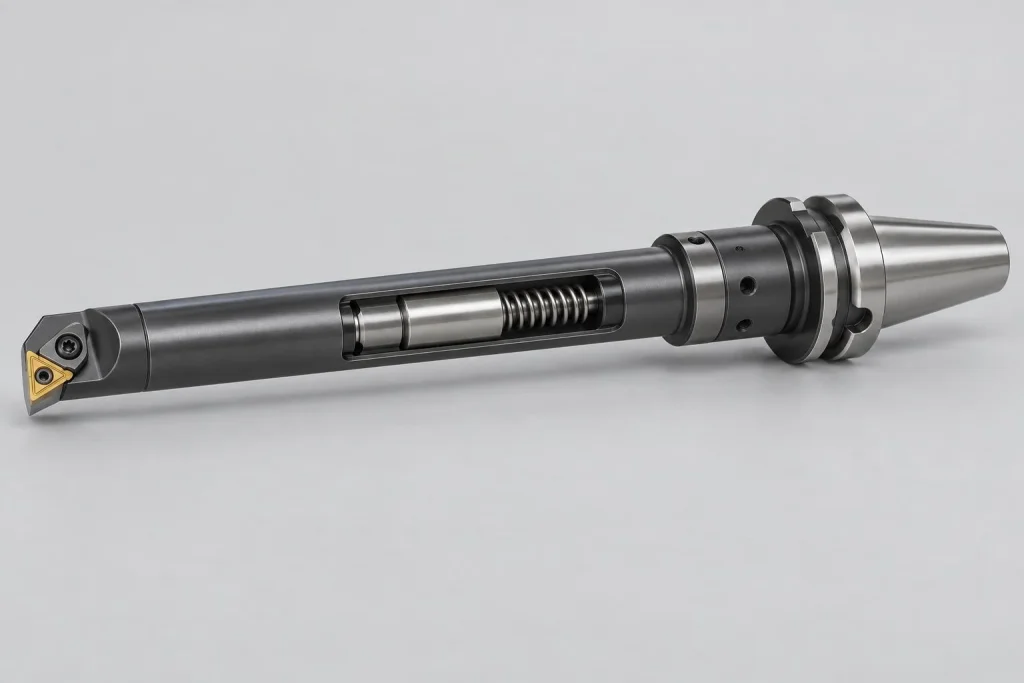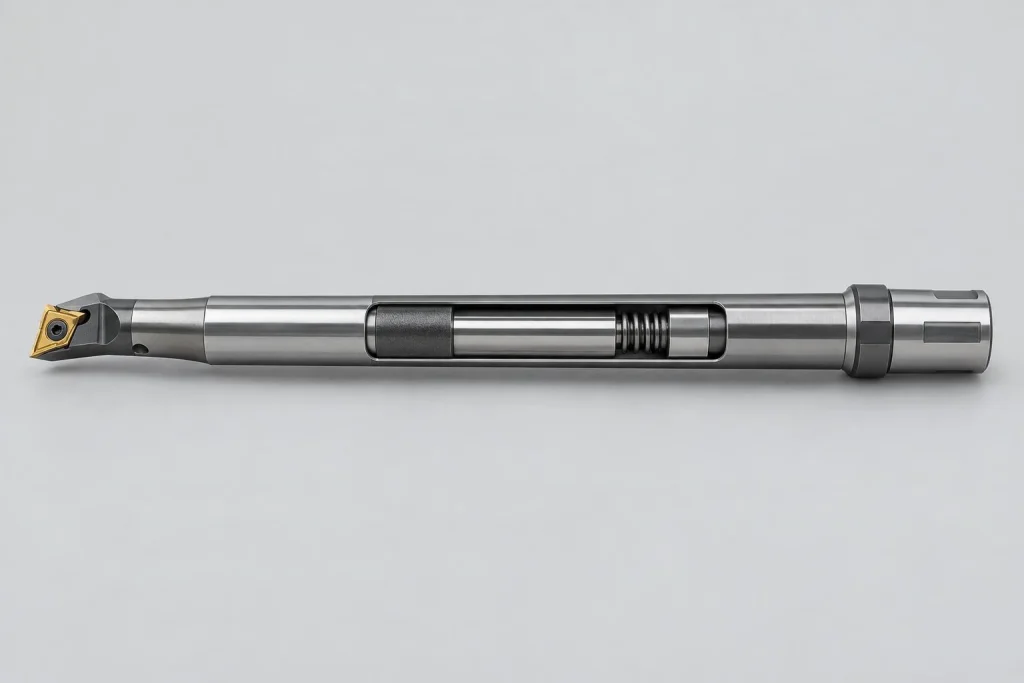

A damped boring bar can help control self-excited vibration during internal turning, especially when the required reach limits rigidity. It cannot compensate for an incompatible holder, loose clamping, damaged insert or unsuitable cutting conditions. Diagnose the setup before changing the bar.
Identify the source of an unstable bore
A repeating surface pattern and audible vibration can indicate chatter, but they do not identify the cause on their own. Check the insert edge, clamping surfaces, workpiece support and machine condition. Separate vibration problems from chip scratching, built-up edge and dimensional drift.
Improve the basic setup first
| Selection factor | What to check |
|---|---|
| Overhang | Minimize unsupported length while keeping clearance for the complete tool path. |
| Bar diameter | Choose the largest diameter that clears the bore, insert and chips. |
| Clamping | Use the specified clamping length and holder; follow the assembly instructions. |
| Cutting edge | Match insert geometry and grade to the material and operation. An overly demanding edge can increase cutting force. |
| Parameters | Review speed, feed and depth of cut against the tool supplier guidance; assess changes under controlled conditions. |
When damping is worth considering
Consider a damped system when the part requires reach that cannot be shortened and a sound setup still has stability problems. Confirm the specific assembly limits. A head change, extension or different holder can change the behavior; do not transfer a reach claim from one system to another.
Prepare a useful test and inquiry
Record the bore diameter, cutting depth, unsupported projection, workpiece material, holder, insert and current parameters. Describe where vibration starts and how the bore looks. These details help distinguish a tool-selection issue from workholding or chip-control problems.
Compare available assemblies in the damped boring tool catalog, or inspect the internal-turning damped bar.
Request a tooling recommendation
Send your setup details and bore drawing for a configuration review. Send your requirements to Wujinniu for configuration and availability confirmation.
Frequently asked questions
Q: Does a damped boring bar eliminate all chatter?
A: No. Its effect depends on the complete setup, tool reach, cutting conditions and workpiece support. Correct clamping and compatible components remain essential.
Q: Should I reduce feed whenever chatter starts?
A: Not automatically. Check the supplier cutting guidance and chip formation. An unsuitable feed can cause rubbing or poor chip control; diagnose the setup before changing parameters.
Q: Can I assume a fixed length-to-diameter limit?
A: No. Obtain the approved reach for the exact bar, head and holder assembly rather than applying a generic ratio.