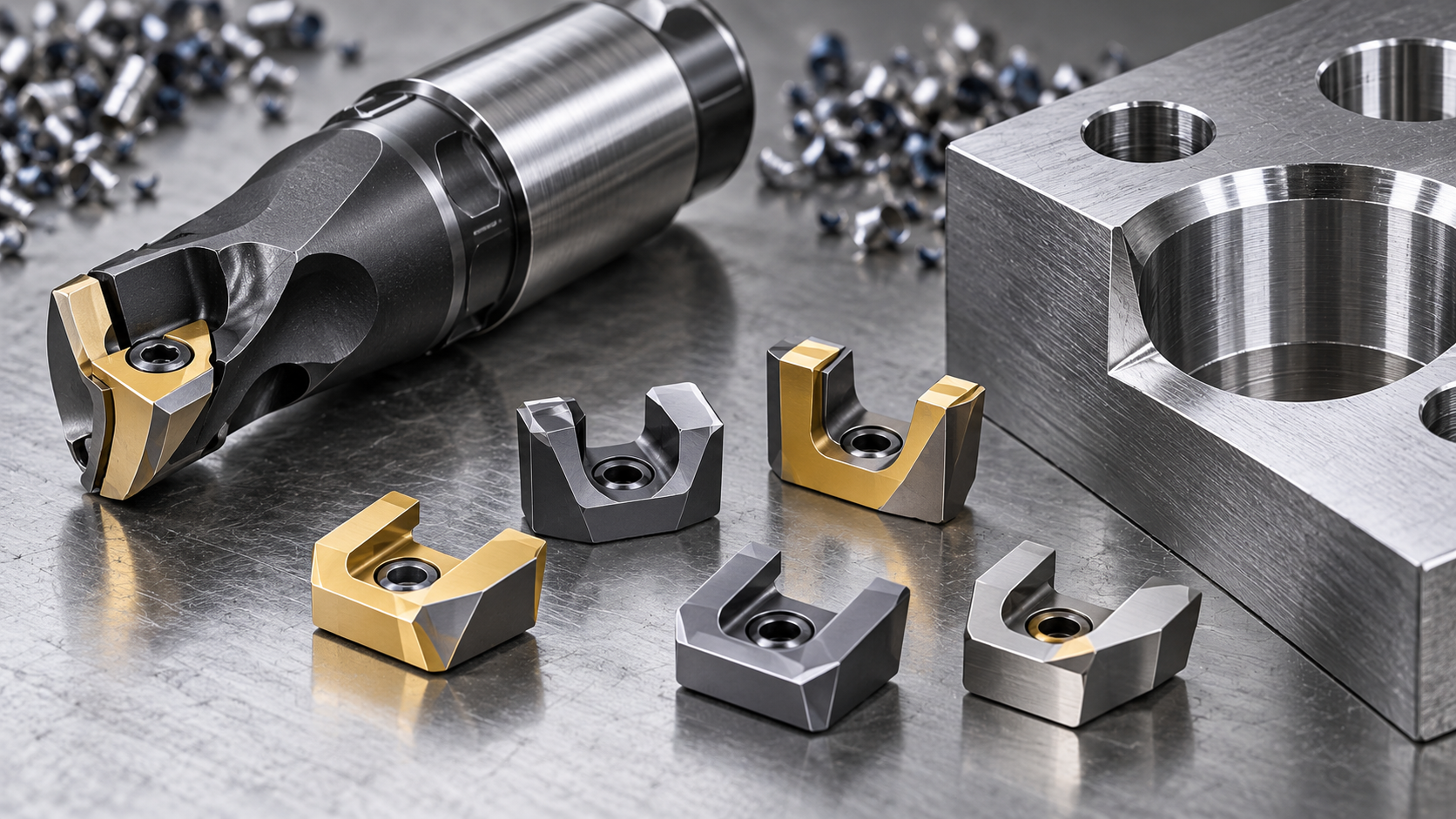
Choosing a carbide-tipped U-shaped insert is a system decision rather than a simple replacement purchase. The insert must match the U-drill body, pocket geometry, workpiece and coolant path. This guide explains the checks that help CNC machinists select a compatible indexable drilling insert and avoid ordering a blade that cannot seat correctly.

What is a carbide-tipped U-shaped insert?
A carbide-tipped U-shaped insert is a replaceable cutting element used in an indexable U-drill or related holemaking system. The carbide cutting edge provides the wear resistance needed for repeated metal drilling, while the replaceable format allows the cutting edge to be renewed without replacing the complete tool body. The exact shape, seat and edge preparation depend on the tool system.
Confirm the U-drill interface first
Before selecting an insert, identify the compatible holder or U-drill body. Check the pocket shape, locating surfaces, screw or clamp arrangement, cutting-edge orientation and coolant direction. A visually similar insert can still be unsuitable if its seating surfaces or chipbreaker geometry differ. Use the tool drawing or manufacturer catalogue to confirm the interface.
Match the workpiece and application
Workpiece material affects insert grade, edge preparation and cutting conditions. Steel, cast iron, stainless steel and alloy materials can require different geometries or grades. Hole diameter, depth, interrupted surfaces, rigidity and chip evacuation also influence the selection. Do not choose a grade from the word “carbide” alone; confirm the application range with the tool manufacturer.
What is confirmed about the Wujinniu carbide blade?
Wujinniu lists a U-Drill Carbide Blade for Steel and Cast Iron CNC Drilling. The confirmed listing identifies tungsten carbide, galvanized and zinc-plated options, CNC metal drilling use, and compatibility with a U-drill body. It also names steel, alloy iron and stainless steel as workpiece materials. The listing does not confirm that every U-shaped insert fits every U-drill body, so the holder interface and geometry still need to be checked before ordering.
Coolant, chip control and setup
Through-tool coolant can help move chips out of the hole, but the correct direction and pressure depend on the drilling system and machine. Secure clamping, low runout and adequate rigidity are essential for a stable insert. Inspect the first hole for diameter, roundness, surface condition and chip shape. If chips pack in the hole, stop and review coolant delivery, feed, depth strategy and insert geometry.
Carbide-tipped insert selection checklist
- Record the U-drill body model and insert pocket geometry.
- Confirm the insert shape, seat, cutting-edge orientation and clamping method.
- Match the grade and edge preparation to the workpiece and operation.
- Confirm hole diameter, depth, machine rigidity and coolant capability.
- Use the manufacturer’s cutting chart instead of guessing speed and feed.
Frequently Asked Questions
Is any carbide insert suitable for a U-drill?
No. The insert must match the body, pocket, locating surfaces and clamping system. Confirm compatibility from a drawing or manufacturer catalogue.
Does carbide automatically mean higher cutting speed?
Not in every application. Cutting speed depends on grade, geometry, workpiece, holder rigidity, coolant and machine conditions. Confirm recommended data with the tool manufacturer.
Can I replace a U-drill insert without checking the coolant path?
You should check it first. A different seat or geometry can change coolant access and chip evacuation, even when the insert looks similar.
Technical information is prepared by the Wujinniu CNC tooling team based on product application data and machining requirements.