
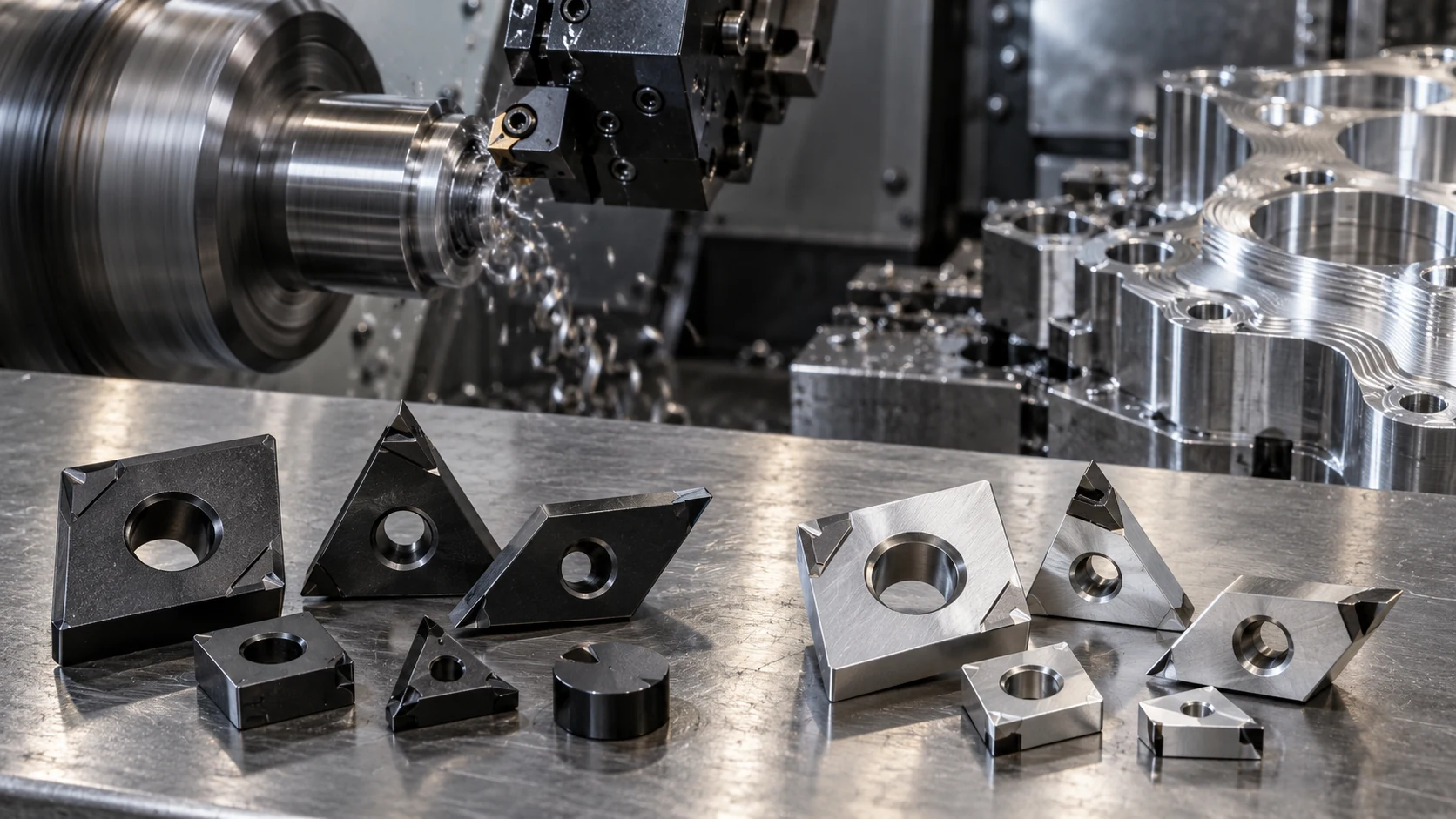
CBN and PCD inserts solve different cutting problems. CBN is suited to hardened steel and cast iron, while PCD is suited to aluminum and other non-ferrous alloys. Choosing the grade by workpiece and operation helps control wear, finish and tool cost.

When to choose CBN inserts
Use CBN when the workpiece is hardened steel or cast iron and the process requires a wear-resistant cutting edge. Confirm the hardness range, interrupted-cut condition, edge preparation and machine rigidity before selecting the insert.
When to choose PCD inserts
PCD is commonly selected for aluminum, copper and other non-ferrous alloys where built-up edge and surface finish are concerns. Verify the required edge geometry, rake angle, coolant practice and workholding stability.
How to specify the insert
Start with the workpiece, then define turning or milling, holder interface, insert shape, nose radius and coating or grade. Cutting speed and feed should be confirmed with the machine supplier and a controlled test cut.
Product fit
The Wujinniu CBN and PCD insert range is intended for CNC turning and milling of hardened steel, cast iron, aluminum and non-ferrous alloys. Review the product specifications before ordering.
Frequently Asked Questions
Can CBN inserts cut aluminum?
CBN is intended for ferrous materials; PCD is generally the better choice for aluminum and non-ferrous alloys.
What should be confirmed before ordering?
Confirm insert geometry, grade, nose radius, holder compatibility, workpiece material and minimum order quantity.
For product specifications, see CBN and PCD Inserts for Hardened Steel Turning and Aluminum Milling.
Technical information is prepared by the Wujinniu CNC tooling team based on product application data and machining requirements.