
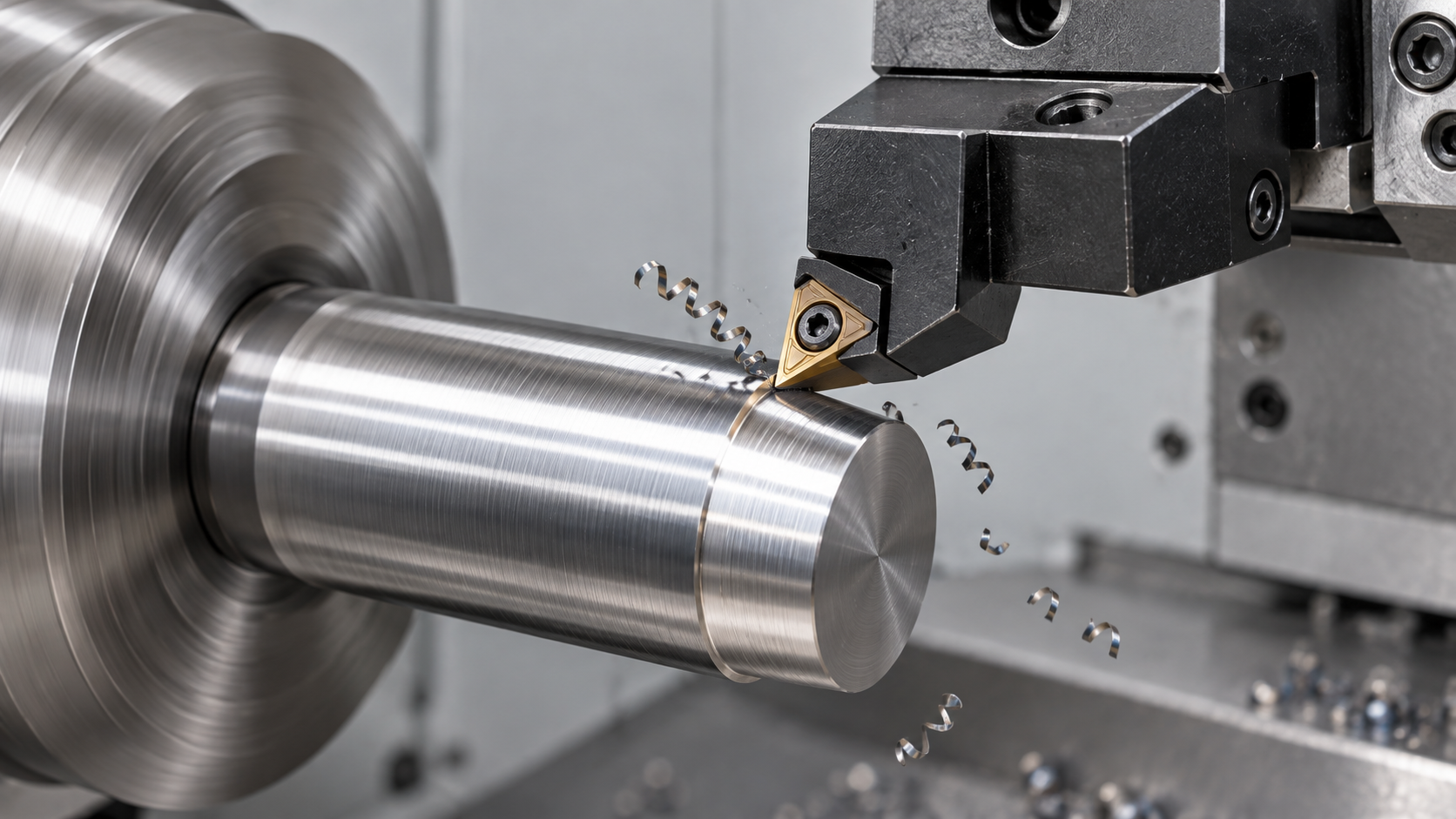
How to select a 91-degree right-hand CNC turning tool holder for external turning and facing by checking insert, machine interface, rigidity and application.

Confirmed product information
The local Precision 91° Right-Hand CNC Tool Holder listing identifies MCGNR2020K12/2525M12 and external turning and facing use. Confirm the exact interface, insert and dimensions before ordering.
What does 91 degrees describe?
The angle describes the holder geometry and cutting orientation. It does not by itself define insert grade, nose radius, shank size or suitable workpiece.
Right-hand holder selection
Confirm the cutting direction, turret position, insert orientation and clearance. A right-hand holder must match the machine setup and programmed tool path.
How to select the tool
Begin with the operation, workpiece, required tolerance and machine interface. Confirm the holder, insert seat, clamping length and usable reach from the technical drawing. Similar names do not guarantee compatibility. Use the manufacturer application chart for speed, feed, depth of cut and coolant.
Setup and first-cut checks
Clean all mating surfaces, minimize unsupported reach and check runout before cutting. Inspect the first part for size, roundness, surface finish, chip shape and tool wear. If vibration or poor finish appears, review workholding, insert geometry, cutting direction and parameters before changing the product.
Purchasing checklist
- Confirm machine and holder interface.
- Confirm insert or cutting-edge geometry.
- Confirm workpiece material and required tolerance.
- Confirm reach, clearance and coolant access.
- Request a drawing when any dimension is unclear.
Frequently Asked Questions
Can I use this tool on any CNC machine?
No. Confirm machine interface, holder, clearance, insert system and application requirements before ordering.
Does the nominal size guarantee the finished result?
No. Final size and finish depend on setup rigidity, runout, workpiece, insert geometry and documented cutting conditions.
What should I provide for a quotation?
Provide the machine interface, workpiece material, required diameter or range, depth, quantity and drawing if available.
Related resources: Boring Tools | Turning Tools
Technical information is prepared by the Wujinniu CNC tooling team based on product application data and machining requirements.
Practical application notes
Production results depend on the complete cutting system. The nominal name or angle is only one part of the selection. Confirm the machine, holder, insert seat, cutting direction, workpiece and required tolerance before using a new configuration. When the catalogue does not state a dimension, grade or cutting condition, request the technical drawing and confirm the requirement with the tool manufacturer.
For a first trial, use a clean and rigid setup with the shortest practical projection. Check that the insert is seated correctly and that the cutting edge has adequate clearance. Measure the first component rather than relying on visual inspection. Record the tool configuration, workpiece material, coolant method, speed, feed and depth of cut so that a successful setup can be repeated.
Chip control is another useful signal. Long, tangled or recut chips can indicate an unsuitable geometry, insufficient coolant or an unstable parameter combination. Abnormal sound, a repeating surface pattern or rapid edge wear should be treated as a reason to stop and review the setup. Changing several variables at once makes the cause difficult to identify, so adjust one documented variable at a time.
When requesting a quotation, include the machine model or interface, material and hardness, operation type, target diameter or tolerance, required reach, expected quantity and any drawing. This information allows the supplier to check the actual configuration instead of recommending a product from a short keyword alone. OEM or customized options should be confirmed from drawings and application conditions before production.
Tool life should also be evaluated against the actual production objective. A stable edge, predictable chip evacuation and repeatable measurement are often more useful than an unverified claim about maximum performance. Keep the tool, insert and holder identification with the process sheet, and note the inspection method used for the first parts. If a configuration is used on a different material, diameter or machine, repeat the confirmation process because the previous result may not transfer directly.
Before production release, confirm the final drawing, interface and application conditions with the supplier. This simple review helps prevent a technically similar tool from being used in the wrong holder or operation.
Before production release, confirm the final drawing, interface and application conditions with the supplier. This review helps prevent a technically similar tool from being used in the wrong holder or operation.