
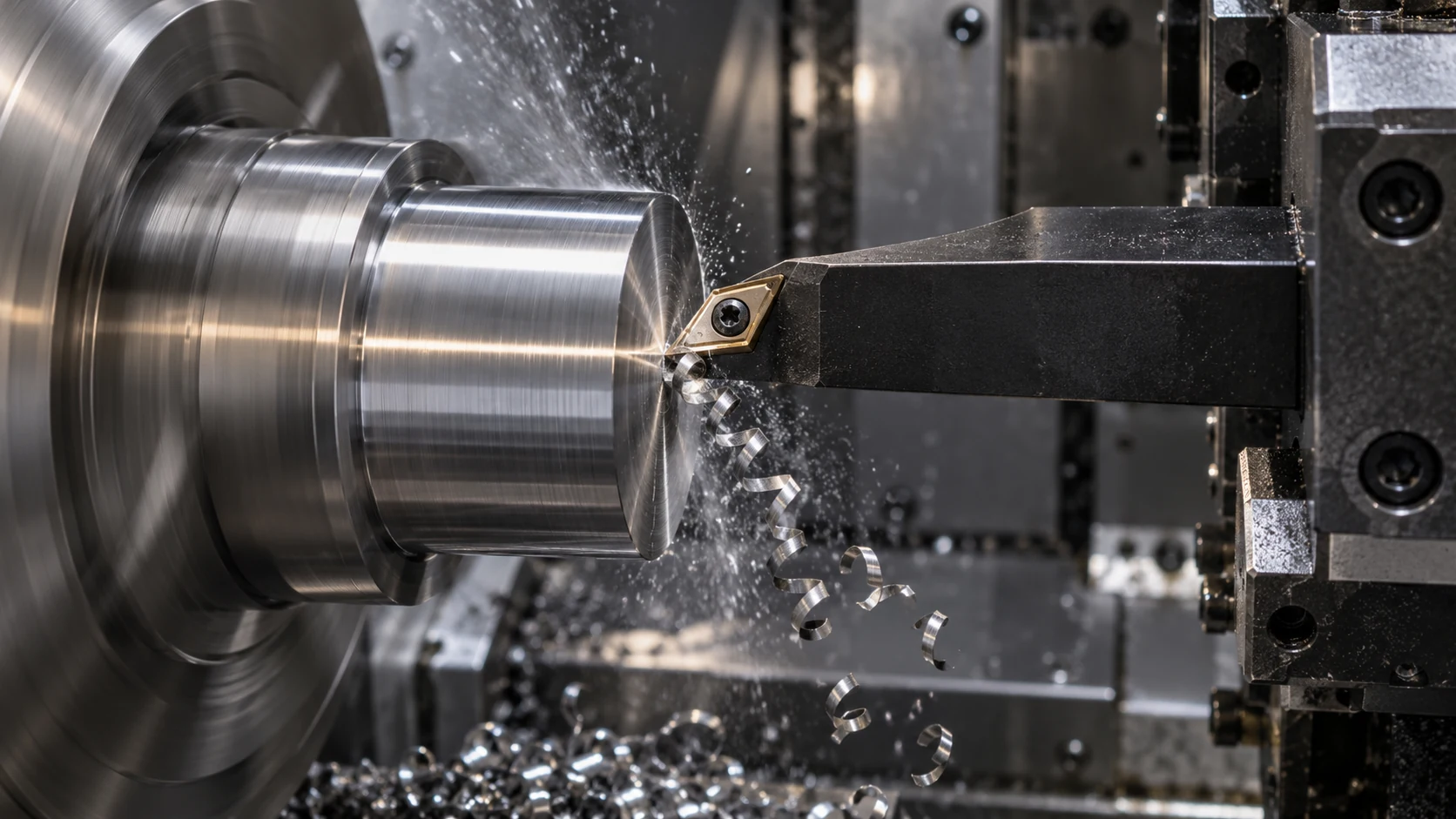
An SDACR/L holder should be paired with the insert specified for its exact version. “DCMT” identifies an insert family, not a universal fit. Confirm the full holder code, full insert code, seat geometry and fastening parts before buying or assembling the combination.
Read the holder code as a starting point
Mitsubishi Materials’ external-holder identification guide separates clamping structure, insert shape, cutting angle, clearance and hand. It also identifies shank and cutting-edge dimensions in the complete designation. These elements explain why a short family name cannot replace the full catalogue entry.
For a local SDACR/L listing, the confirmed facts include an external-turning application, a listed 93° angle, DCMT-series inserts and right- or left-hand options. Exact shank and insert dimensions remain version-dependent. A photograph or shortened title cannot resolve those missing fields.
Match the complete insert to the seat
Ask for the exact recommended insert designation and the matching holder drawing. Verify shape, clearance, size, thickness, hole and seating arrangement. A different chipbreaker or grade may suit a different application, but it does not excuse a mismatch in the mechanical fit.
Check the actual insert and holder markings against the packaging. The insert should seat as the manufacturer specifies, with the correct fastening parts. Do not grind the pocket, enlarge a hole or force the screw to make an apparently similar insert fit.
Use a compatibility record rather than a guess
| Record | Required evidence |
|---|---|
| Holder version | Full code, hand, shank dimensions and drawing |
| Insert version | Full code including size, geometry and grade |
| Pocket and seat | Manufacturer-approved combination and seat parts |
| Fastening | Correct screw or clamp, tool and tightening instructions |
| Operation | Material, cut direction, feature and clearance check |
A supplier response should identify a combination, not just repeat that the holder takes diamond-shaped inserts. Ask whether the supplied seat is a separate replaceable component. Keep the record for replacement purchases. Include clear photographs of the component markings so purchasing can detect an unintended substitution. If any component changes, check the affected interface again before assuming the original approval still applies.
Inspect assembly without using force as a test
Clean the pocket and inspect for chips, burrs, damaged threads and worn seating surfaces. Install only the recommended insert and fastening parts. Follow the specified tightening procedure; a screw that starts to engage is not proof of correct seating or safe compatibility.
If the insert rocks, sits visibly proud in an unexpected way, or cannot be secured according to the instructions, stop and confirm the components. Do not use a trial cut to discover whether a questionable fit holds. Handedness and edge orientation also need checking against the machine setup.
Separate fit from cutting suitability
A mechanically compatible insert may still have an unsuitable grade or edge geometry for the workpiece. After confirming fit, select geometry and grade using material and operation guidance from the insert manufacturer. Then establish starting conditions for the actual setup.
For an enquiry, provide photos of the holder markings and pocket, the current insert code, material and intended feature. Ask the supplier to confirm the exact replacement and service parts in writing. This is more reliable than ordering an insert solely because its outline resembles the one in a product image.
Frequently asked questions
Does DCMT mean every DCMT size fits?
No. The family name does not establish size, thickness, hole, seat or fastening compatibility with a specific holder.
Can the same insert work in right- and left-hand holders?
Check the exact holder and insert combination. Do not infer suitability from hand alone or from a photograph.
What if the insert does not sit correctly?
Stop assembly, clean and inspect the pocket, and verify the full component codes. Do not force the insert or modify the seat.
Related selection resources
Choose an OD turning tool · Tooling configuration support
Technical references and scope
Manufacturer references explain general selection principles or their own systems; they do not certify another supplier’s compatibility or performance. Product ranges above come from the linked local listings. This guide does not replace instructions for the exact assembly. Sources reviewed October 27, 2026.
Technical information is prepared by the Wujinniu CNC tooling team based on product application data and machining requirements.